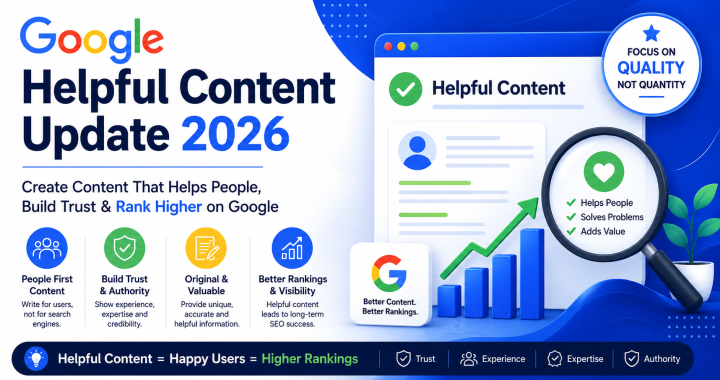
Before exploring the update in detail, it’s important to understand that Google’s Helpful Content system is designed to reward content created for people—not just for search engines. In 2026, this principle remains central to Google’s ranking systems. Websites that publish original, valuable, and trustworthy content are more likely to achieve long-term SEO success.
Google Helpful Content Update 2026: Complete Guide to Creating Content That Ranks
Google’s Helpful Content Update continues to play a major role in determining which websites rank well in search results. Since its introduction, the update has encouraged website owners, bloggers, and businesses to focus on creating content that genuinely helps users instead of simply targeting keywords.
In 2026, Google’s search systems have become even better at identifying content that demonstrates real expertise, satisfies user intent, and provides a positive experience. As AI-generated content becomes more common, Google increasingly rewards websites that add original value, practical insights, and trustworthy information.
Whether you run a business website, an eCommerce store, a blog, or a digital marketing agency, understanding the Helpful Content Update is essential for maintaining and improving your search rankings.
What Is the Google Helpful Content Update?
The Google Helpful Content Update is a ranking system designed to reward content created primarily for people while reducing the visibility of pages written mainly to manipulate search rankings.
Instead of focusing only on keywords, Google evaluates whether your content answers users’ questions effectively and provides genuine value.
Helpful content should:
- Solve a user’s problem.
- Provide accurate and up-to-date information.
- Demonstrate real expertise.
- Be easy to read and navigate.
- Leave visitors satisfied without needing to search elsewhere.
This people-first approach helps users find more useful and trustworthy information.
Why Did Google Introduce the Helpful Content Update?
Google’s goal is to improve the quality of search results by reducing low-value content that offers little benefit to readers.
The update aims to:
- Improve search quality.
- Reward original content.
- Reduce keyword-stuffed pages.
- Discourage misleading clickbait.
- Promote trustworthy websites.
- Encourage better user experiences.
Ultimately, Google wants users to find reliable answers quickly and easily.
How the Helpful Content Update Works
Google uses a variety of signals to evaluate whether content is genuinely helpful. It doesn’t rely on a single factor but considers the overall quality and usefulness of a website’s content.
Some of the key elements Google evaluates include:
- Relevance to the search query.
- Depth and completeness of the information.
- Originality and unique insights.
- User satisfaction.
- Website credibility.
- Content freshness.
- Overall site quality.
A website with consistently helpful content is more likely to perform well over time.
Characteristics of Helpful Content
Helpful content shares several common qualities.
1. It Answers Real Questions
Every article should solve a specific problem or answer a question users are searching for.
For example, instead of writing a vague article titled “SEO Tips,” create a detailed guide such as “How to Improve Local SEO for Small Businesses in 2026.”
Specific content better matches user intent.
2. It Demonstrates Real Experience
Google values content written by people with first-hand knowledge or practical experience.
Examples include:
- Case studies
- Tutorials
- Product testing
- Personal experiences
- Real business examples
These elements make your content more trustworthy and useful.
3. It Is Original
Avoid copying or slightly rewriting competitors’ articles.
Instead, provide:
- Original research
- Custom graphics
- Expert opinions
- Practical examples
- Actionable advice
Unique content gives readers a reason to choose your website over others.
4. It Covers Topics Thoroughly
Helpful content answers the main question while also addressing related concerns.
For example, if you’re writing about Google Ads, discuss:
- What Google Ads is.
- How it works.
- Types of campaigns.
- Costs.
- Best practices.
- Common mistakes.
- Optimization tips.
Comprehensive content improves user satisfaction.
5. It Is Easy to Read
Good formatting improves readability.
Use:
- Short paragraphs
- Headings
- Bullet points
- Numbered lists
- Images
- Tables where appropriate
Well-structured content keeps readers engaged.
People-First Content vs Search Engine-First Content
Understanding the difference between these approaches is crucial.
People-First Content
- Solves real problems.
- Demonstrates expertise.
- Uses natural language.
- Provides original insights.
- Focuses on user satisfaction.
- Encourages trust.
Search Engine-First Content
- Overuses keywords.
- Copies existing articles.
- Covers topics superficially.
- Prioritizes rankings over readers.
- Relies on clickbait titles.
- Offers little unique value.
Google increasingly rewards websites that follow a people-first strategy.
The Role of EEAT
Google’s Helpful Content system aligns closely with the principles of Experience, Expertise, Authoritativeness, and Trustworthiness (EEAT).
You can strengthen EEAT by:
- Adding author biographies.
- Displaying contact information.
- Citing reputable sources.
- Publishing accurate information.
- Updating outdated content.
- Showcasing customer reviews and testimonials.
These signals help build credibility with both users and search engines.
AI Content and the Helpful Content Update
AI tools have become valuable for brainstorming, drafting, and improving content. However, Google focuses on the quality of the final content rather than how it was created.
If you use AI, make sure to:
- Fact-check every claim.
- Add original insights.
- Include practical examples.
- Edit for clarity and accuracy.
- Avoid publishing generic or repetitive text.
AI should support your writing process—not replace human expertise and judgment.
Common Mistakes That Can Hurt Rankings
Avoid these practices if you want to succeed after the Helpful Content Update:
- Publishing thin content.
- Keyword stuffing.
- Copying competitor articles.
- Using misleading headlines.
- Ignoring user intent.
- Producing large volumes of low-quality pages.
- Failing to update outdated information.
- Overusing AI without human review.
These mistakes can reduce the perceived quality of your website.
Best Practices for Creating Helpful Content
Follow these strategies to improve your content quality:
- Research user intent before writing.
- Write comprehensive articles.
- Use clear headings and subheadings.
- Include real examples and case studies.
- Add visuals where they improve understanding.
- Update evergreen articles regularly.
- Improve page speed and mobile usability.
- Build internal links to related content.
- Focus on readability and accessibility.
- Review and refresh content periodically.
Consistency is key to long-term SEO success.
Benefits of Helpful Content
Publishing helpful content provides advantages beyond rankings.
Some key benefits include:
- Higher search visibility.
- Increased organic traffic.
- Better user engagement.
- Longer time spent on your website.
- More backlinks from reputable sites.
- Improved brand authority.
- Greater trust from potential customers.
- Higher conversion rates.
These benefits compound over time as your content library grows.
How to Audit Existing Content
Regular content audits help maintain quality.
Review each article and ask:
- Does it answer the user’s question completely?
- Is the information accurate and current?
- Does it provide unique value?
- Is the page easy to read?
- Are there opportunities to improve examples or visuals?
- Are internal links up to date?
- Does it align with current search intent?
Improving older content can often produce better results than creating new articles from scratch.
Future of Helpful Content
Google’s ranking systems will continue evolving, but the core principle is unlikely to change: reward content that genuinely helps people.
Future trends may place even greater emphasis on:
- First-hand experience.
- Original research.
- Multimedia content.
- Accurate information.
- User satisfaction.
- Trust and transparency.
Businesses that consistently invest in quality will be better positioned for future algorithm updates.
Conclusion
The Google Helpful Content Update 2026 reinforces a simple but powerful message: create content for people first. Instead of chasing algorithm changes or relying on shortcuts, focus on delivering accurate, original, and valuable information that addresses your audience’s needs.
Successful websites combine thoughtful content, strong technical SEO, excellent user experience, and demonstrated expertise. By understanding your audience, matching search intent, and regularly improving your content, you can build long-term search visibility and earn the trust of both users and Google.
Remember, helpful content isn’t just about ranking higher—it’s about creating a better experience for every visitor who lands on your website.
FAQs
1. What is the Google Helpful Content Update?
It is a Google ranking system that rewards content created primarily for people and reduces the visibility of low-value, search-engine-focused content.
2. Does AI-generated content violate the Helpful Content Update?
Not necessarily. Google evaluates the quality and usefulness of content, regardless of how it is created. AI-generated content should be reviewed, fact-checked, and enhanced with original insights before publication.
3. How can I recover if my website loses rankings after the Helpful Content Update?
Review your content for quality, remove or improve thin pages, focus on user intent, update outdated information, strengthen EEAT signals, and provide more original value.
4. How often should I update my content?
Review important pages every few months or whenever significant industry changes occur. Keeping content fresh helps maintain its relevance.
5. What types of websites benefit the most from the Helpful Content Update?
Blogs, business websites, eCommerce stores, educational websites, news portals, and service-based businesses all benefit when they publish original, useful, and trustworthy content that meets user needs.
This article is optimized for readability and SEO, using clear headings, bullet points, and FAQs while targeting keywords such as Google Helpful Content Update 2026, Helpful Content Update, people-first content, EEAT, and Google SEO.