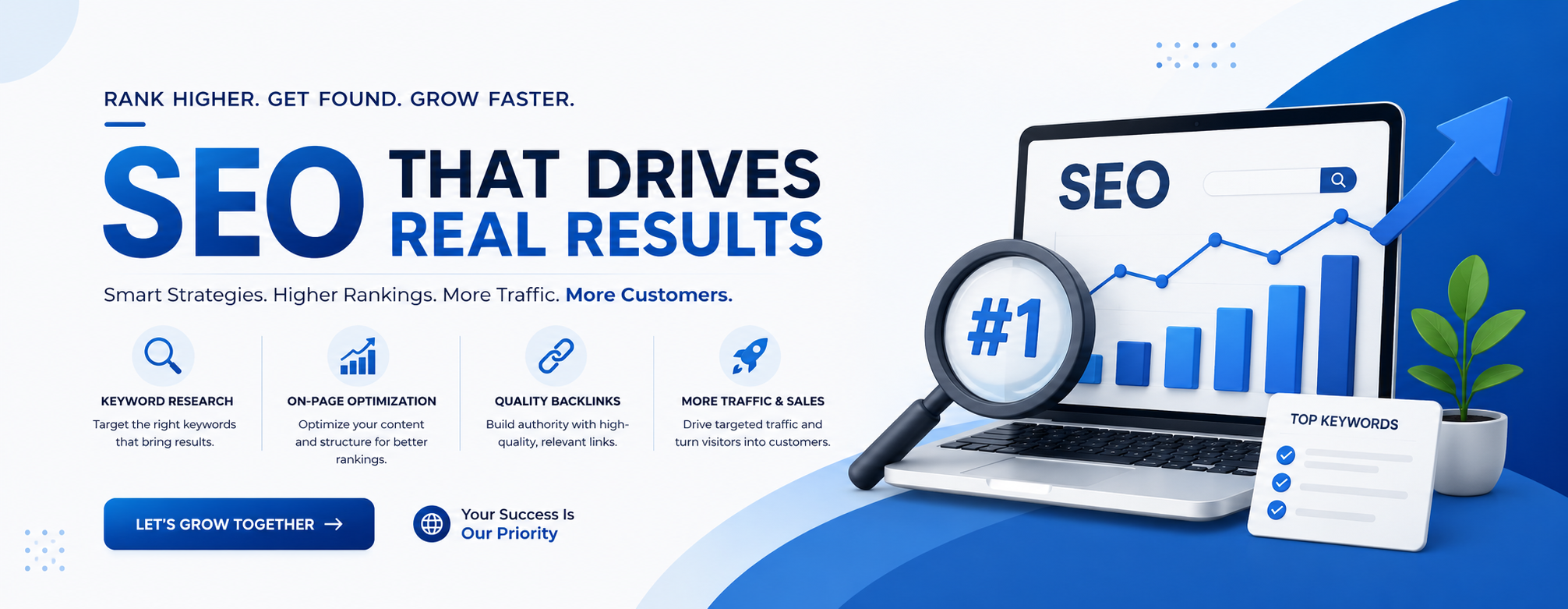

SEO (Search Engine Optimization) is the process of improving a website so it appears higher in search engine results like Google, helping attract more organic (unpaid) traffic.
When users search for products, services, or information related to your business, SEO helps your website rank higher, making it easier for potential customers to find you.
Why is SEO Important?
- 📈 Increases organic website traffic
 🎯 Attracts highly targeted visitors
- 💰 Reduces reliance on paid advertising
- ⭐ Builds brand credibility and trust
- 🚀 Improves user experience and website performance
- 📊 Generates more leads, sales, and conversions
- 🌍 Helps businesses reach local and global audiences
How SEO Works
SEO focuses on optimizing different aspects of your website, including:
- Keyword Research – Finding the words people search for.
- On-Page SEO – Optimizing titles, headings, content, images, and meta descriptions.
- Technical SEO – Improving website speed, mobile-friendliness, security, and crawlability.
- Off-Page SEO – Building high-quality backlinks and increasing your site's authority.
- Local SEO – Optimizing your business for local searches and Google Business Profile.
Types of SEO
- On-Page SEO
- Content optimization
- Title tags
- Meta descriptions
- Internal linking
- Image optimization
- Off-Page SEO
- Link building
- Guest posting
- Brand mentions
- Social signals
- Technical SEO
- Website speed optimization
- Mobile responsiveness
- XML sitemap
- SSL certificate
- Structured data
- Local SEO
- Google Business Profile optimization
- Local citations
- Customer reviews
- Location-based keywords
- Google Business Profile optimization
Benefits of SEO
- Higher Google rankings
- Increased website visitors
- Better user experience
- More qualified leads
- Higher conversion rates
- Long-term marketing results
- Stronger online presence
- Better return on investment (ROI)

SEO (Search Engine Optimization) is divided into several types, each focusing on a different aspect of improving a website's visibility in search engines.
1. On-Page SEO
On-Page SEO involves optimizing the content and elements within your website to make it more releva

nt to search engines and users.
Key Activities:
- Keyword research and placement
- High-quality content creation
- Title tags and meta descriptions
- Header tags (H1, H2, H3)
- Image optimization (Alt text)
- Internal linking
- URL optimization
Goal: Improve the relevance and quality of individual web pages.
2. Off-Page SEO
Off-Page SEO focuses on activities outside your website that improve its authority, trustworthiness, and rankings.
Key Activities:
- Backlink building
- Guest blogging
- Social media promotion
- Brand mentions
- Influencer outreach
- Directory submissions
Goal: Increase your website's authority and credibility.
3. Technical SEO
Technical SEO ensures that search engines can easily crawl, index, and understand your website.
Key Activities:
- Website speed optimization
- Mobile-friendly design
- HTTPS (SSL security)
- XML sitemap creation
- Robots.txt optimization
- Structured data (Schema Markup)
- Fixing broken links
- Improving Core Web Vitals
Goal: Enhance website performance and search engine accessibility.
4. Local SEO
Local SEO helps businesses appear in location-based searches and attract nearby customers.
Key Activities:
- Google Business Profile optimization
- Local keyword targeting
- Customer reviews
- Local citations
- NAP (Name, Address, Phone Number) consistency
- Location-specific landing pages
Goal: Increase visibility in local search results and Google Maps.
5. E-commerce SEO
E-commerce SEO focuses on optimizing online stores to increase product visibility and sales.
Key Activities:
- Product page optimization
- Category page optimization
- Product descriptions
- Customer reviews
- Product schema markup
- Optimized product images
Goal: Drive more organic traffic and boost online sales.
6. International SEO
International SEO helps websites target users in different countries and languages.
Key Activities:
- Multi-language content
- Country-specific domains or subfolders
- Hreflang tags
- Local keyword research
- Regional content optimization
Goal: Reach a global audience with localized search experiences.
Summary Table
| SEO Type | Main Focus | Benefits |
|---|---|---|
| On-Page SEO | Content and page optimization | Better keyword rankings |
| Off-Page SEO | Backlinks and authority | Increased website trust |
| Technical SEO | Website performance | Faster indexing and improved user experience |
| Local SEO | Local search visibility | More nearby customers |
| E-commerce SEO | Online store optimization | Higher product sales |
| International SEO | Global audience targeting | Better visibility across countries |
Each type of SEO plays a unique role in improving your website's performance. A successful SEO strategy combines On-Page SEO, Off-Page SEO, Technical SEO, Local SEO, E-commerce SEO, and International SEO to increase search rankings, attract qualified traffic, and support long-term business growth.