

Google Ads is Google's online advertising platform that allows businesses to promote their products, services, and websites across Google Search, YouTube, Google Maps, Gmail, and millions of partner websites. It operates on a Pay-Per-Click (PPC) model, meaning advertisers typically pay only when someone clicks on their ad.
Google Ads helps businesses reach potential customers at the right time by displaying ads to people who are actively searching for related products or services or browsing relevant online content. Whether you want to increase website traffic, generate leads, boost sales, or improve brand awareness, Google Ads provides powerful targeting options to help achieve your marketing goals.
How Does Google Ads Work?
Google Ads works by allowing advertisers to bid on keywords related to their business. When a user searches for those keywords, Google conducts an auction to determine which ads will appear. The winning ads are selected based on factors such as bid amount, ad quality, and relevance.
Key Features of Google Ads
- Keyword Targeting – Show ads to users searching for specific keywords.
- Location Targeting – Reach customers in selected cities, regions, or countries.
- Audience Targeting – Target users based on interests, demographics, and online behavior.
- Budget Control – Set daily or monthly advertising budgets.
- Performance Tracking – Monitor clicks, impressions, conversions, and return on investment (ROI).
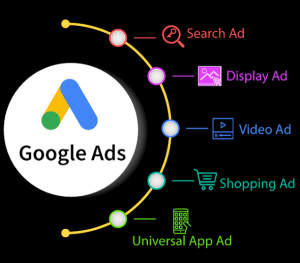
- Multiple Ad Formats – Run Search, Display, Shopping, Video, App, and Performance Max campaigns.
Benefits of Google Ads
- Drives instant website traffic.
- Generates high-quality leads.
- Increases online sales and conversions.
- Improves brand awareness.
- Reaches customers at the right moment.
- Offers flexible budgets for businesses of all sizes.
- Provides detailed performance reports and analytics.
Who Should Use Google Ads?
Google Ads is suitable for:
- Small and medium-sized businesses
- E-commerce stores
- Local businesses
- Service providers
- Startups
- Large enterprises
- Digital marketing agencies
Why is Google Ads Important?
Google Ads enables businesses to connect with customers who are actively looking for their products or services. Unlike traditional advertising, it delivers measurable results, allowing advertisers to optimize campaigns and maximize their return on investment.
Google Ads is an online advertising platform that helps businesses reach their target audience through paid ads on Google Search, YouTube, Google Maps, and other Google partner websites to increase traffic, leads, and sales.


Google updates its search algorithm thousands of times every year, with several major Core Updates significantly impacting website rankings. These updates are designed to improve search quality by rewarding websites that provide valuable, trustworthy, and user-focused content while reducing the visibility of low-quality or manipulative pages.
If your website has experienced changes in rankings after the latest Google Algorithm Update, don't panic. Instead, focus on the ranking factors that Google consistently values. While the exact algorithm remains confidential, Google has repeatedly emphasized quality, relevance, user experience, and trustworthiness as the foundation of search rankings.
This guide explores the top Google ranking factors that matter most after the latest algorithm update and explains how you can optimize your website for long-term SEO success.
Google's mission is to organize the world's information and deliver the most relevant results to users. Every algorithm update aims to:
- Improve search quality
- Remove spammy websites
- Reward helpful content
- Enhance user experience
- Better understand search intent
- Promote trustworthy websites
Instead of trying to "beat" the algorithm, successful websites focus on providing genuine value to users.
1. High-Quality, Helpful Content
Content remains the strongest ranking factor after every Google update.
Google prefers content that answers users' questions clearly, accurately, and completely. Thin, duplicate, outdated, or keyword-stuffed articles are less likely to rank well.
Tips for creating helpful content
- Write for people first, not search engines.
- Cover the topic in depth.
- Use real examples and case studies.
- Update old articles regularly.
- Make your content easy to understand.
Helpful content naturally earns trust, backlinks, and engagement—all of which contribute to better rankings.
2. Search Intent Optimization
Google has become exceptionally good at understanding what users are actually looking for.
For example:
- Someone searching "buy running shoes" expects product pages.
-
Someone searching "how to choose running shoes" expects educational content.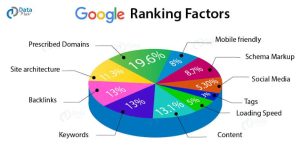
- Someone searching "best running shoes 2026" expects comparison articles.
Before writing any content, ask:
- What problem is the user trying to solve?
- What type of content appears on page one?
- What information would completely satisfy the search?
Matching search intent increases the likelihood of ranking.
3. EEAT (Experience, Expertise, Authoritativeness, Trustworthiness)
Google evaluates whether your content appears credible and trustworthy.
Strong EEAT signals include:
- Author biographies
- Real-world experience
- Accurate information
- Trusted references
- Business contact information
- Positive online reputation
Google increasingly rewards websites that demonstrate genuine expertise instead of generic AI-generated content.
4. Original Content
Originality has become more important than ever.
Avoid simply rewriting competitors' articles. Instead:
- Share unique insights.
- Add original research.
- Include personal experience.
- Publish exclusive statistics.
- Use custom graphics.
Unique content provides additional value that Google wants to surface.
5. User Experience (UX)
A great website experience helps visitors stay longer and engage with your content.
Important UX elements include:
- Fast loading pages
- Easy navigation
- Mobile-friendly design
- Clear typography
- Simple menu structure
- Minimal intrusive pop-ups
Good user experience encourages visitors to continue exploring your website.
6. Mobile-Friendly Website
Most Google searches now happen on mobile devices.
Google primarily indexes the mobile version of websites, making mobile optimization essential.
Mobile SEO Checklist
- Responsive design
- Readable fonts
- Clickable buttons
- Fast mobile speed
- Proper spacing
- Mobile-friendly images
A poor mobile experience can negatively affect rankings and conversions.
7. Website Speed
Page speed directly affects user satisfaction.
Slow websites experience:
- Higher bounce rates
- Lower engagement
- Reduced conversions
Improve speed by:
- Compressing images
- Using browser caching
- Minimizing CSS and JavaScript
- Choosing reliable hosting
- Enabling lazy loading
- Using a CDN
Faster websites provide a smoother browsing experience.
8. Core Web Vitals
Core Web Vitals measure real-world user experience.
Google evaluates:
- Largest Contentful Paint (LCP)
- Interaction to Next Paint (INP)
- Cumulative Layout Shift (CLS)
Improving these metrics helps users interact with your site more efficiently.
9. Keyword Optimization
Keywords still matter, but natural usage is key.
Instead of repeating the same keyword excessively:
- Use variations.
- Include related terms.
- Add semantic keywords.
- Write naturally.
Google understands context better than ever, so focus on relevance instead of keyword density.
10. High-Quality Backlinks
Backlinks remain one of the strongest ranking signals.
Quality matters far more than quantity.
Good backlinks come from:
- Industry blogs
- News websites
- Educational institutions
- Government websites
- Trusted business directories
Avoid buying backlinks or participating in link schemes, as these practices can lead to penalties.
11. Internal Linking
Internal links help Google understand your site's structure and distribute authority between pages.
Benefits include:
- Better crawling
- Improved navigation
- Increased page views
- Stronger topical relevance
Always link to related articles where appropriate.
12. Technical SEO
Technical SEO ensures that search engines can crawl and index your website efficiently.
Key areas include:
- XML sitemap
- Robots.txt
- HTTPS security
- Canonical tags
- Structured URLs
- Broken link fixes
- Proper redirects
Even excellent content can struggle to rank if technical issues prevent Google from accessing it.
13. Fresh and Updated Content
Google favors content that stays current, especially for topics that change frequently.
Update articles by:
- Adding new statistics
- Refreshing screenshots
- Improving examples
- Expanding sections
- Removing outdated information
Regular updates signal that your content remains relevant.
14. Structured Data (Schema Markup)
Schema markup helps search engines understand your content.
Common schema types include:
- Article
- FAQ
- Product
- Local Business
- Review
- Organization
- Breadcrumb
Structured data can improve eligibility for rich search results, increasing visibility.
15. Secure Website (HTTPS)
Security is essential for user trust.
Ensure your website:
- Uses HTTPS
- Has a valid SSL certificate
- Protects user information
- Avoids mixed-content errors
Visitors are more likely to trust secure websites.
16. User Engagement Signals
While Google doesn't publicly confirm every engagement metric as a ranking factor, strong user interaction often correlates with better performance.
Positive signals include:
- Longer time on page
- More pages per session
- Lower bounce rates (context-dependent)
- Repeat visitors
- Higher engagement
Focus on creating content that keeps users interested.
Best Practices to Improve Rankings
Follow these SEO best practices consistently:
- Publish original content regularly.
- Focus on user intent.
- Improve website speed.
- Optimize for mobile users.
- Build high-quality backlinks.
- Strengthen internal linking.
- Keep content updated.
- Improve Core Web Vitals.
- Fix technical SEO issues.
- Build trust with clear author and business information.
SEO is a long-term strategy, and consistent improvements often produce sustainable results.
Common SEO Mistakes to Avoid
Many websites lose rankings because of avoidable mistakes.
Avoid:
- Keyword stuffing
- Duplicate content
- Buying backlinks
- Thin content
- Ignoring mobile optimization
- Slow page speed
- Poor navigation
- Outdated information
- Broken links
- Publishing content solely for search engines