How to Build an Omnichannel Marketing Strategy That Converts (2026 Guide)

How to Build an Omnichannel Marketing Strategy That Converts (2026 Guide)

Today’s customers interact with brands through multiple channels before making a purchase. They might discover your business through a Google search, read your blog, follow you on Instagram, receive an email newsletter, and finally complete a purchase on your website. Because of this non-linear customer journey, businesses need more than a single marketing channel to succeed—they need an omnichannel marketing strategy.

An omnichannel marketing strategy creates a seamless and consistent customer experience across all online and offline touchpoints. Instead of treating each marketing channel separately, businesses integrate them so customers enjoy a connected experience regardless of where they engage with the brand.

In this guide, you’ll learn what omnichannel marketing is, why it matters, how to build an effective strategy, and the best practices for increasing conversions in 2026.Continue reading
What Is First-Party Data?

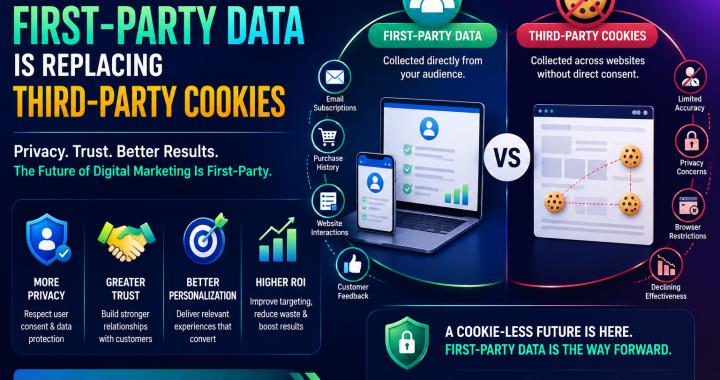
The digital marketing landscape is undergoing one of its biggest transformations in years. For a long time, marketers relied on third-party cookies to track users across websites, deliver personalized advertisements, and measure campaign performance. However, growing concerns about online privacy, stricter data protection regulations, and changes introduced by major web browsers have significantly reduced the role of third-party cookies.

As businesses adapt to this new reality, first-party data has become the foundation of modern digital marketing. Instead of depending on data collected by external sources, companies are now focusing on gathering information directly from their own customers. This approach not only improves data accuracy but also builds trust and supports long-term customer relationships.

In this article, we’ll explore why first-party data is replacing third-party cookies, the benefits for businesses, practical ways to collect first-party data, and strategies for using it effectively in 2026.

What Is First-Party Data?

First-party data is information that a business collects directly from its customers through its own digital channels. Since this data comes from people who have interacted with the brand, it is generally more reliable, relevant, and privacy-friendly.

Examples of first-party data include:

  • Customer names and contact information
  • Purchase history
  • Website behavior
  • Email subscriptions
  • Customer feedback
  • Product preferences
  • Loyalty program activity
  • Mobile app usage
  • Customer support interactions

This data belongs to the business that collects it, giving marketers greater control over how it is stored and used.Continue reading

The Rise of Short-Form Video Marketing Across Social Platforms

The Rise of Short-Form Video Marketing Across Social Platforms

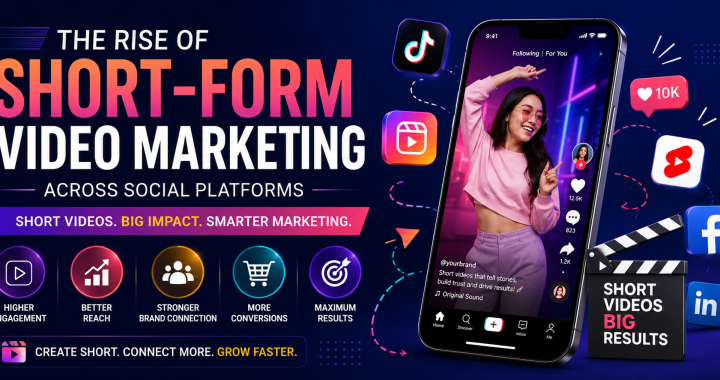
In today’s fast-paced digital world, attention spans are shorter than ever. Consumers want content that is engaging, informative, and easy to consume within seconds. This shift in user behavior has made short-form video one of the most powerful tools in digital marketing. Platforms such as Instagram Reels, YouTube Shorts, TikTok, Facebook Reels, and LinkedIn Video have transformed how brands connect with their audiences.

In 2026, short-form video marketing is no longer just a trend—it has become a necessity for businesses looking to increase brand awareness, drive engagement, and generate sales. Whether you’re a startup, a local business, or a global brand, incorporating short-form videos into your marketing strategy can help you stay ahead of the competition.

This guide explores why short-form video marketing is dominating social media, its benefits, best practices, emerging trends, and how businesses can use it effectively.Continue reading

SEO Trends That Will Dominate Search Rankings in 2026

Here’s a complete, SEO-friendly blog article that you can publish on your website.

SEO Trends That Will Dominate Search Rankings in 2026

Search Engine Optimization (SEO) is evolving faster than ever before. As search engines become more intelligent and user expectations continue to grow, businesses must adapt their SEO strategies to remain visible online. In 2026, ranking on search engines is no longer just about using keywords or building backlinks. Google’s AI-powered algorithms, user experience signals, and content quality have become the key factors that determine search rankings.

Whether you’re a business owner, blogger, marketer, or SEO professional, understanding the latest SEO trends is essential for driving organic traffic and staying ahead of the competition.

In this guide, we’ll explore the top SEO trends expected to dominate search rankings in 2026 and how you can prepare your website for long-term success.Continue reading

How AI Is Transforming Digital Marketing Campaigns in 2026

It looks like you want a complete blog article. Here’s a polished, SEO-friendly version that you can publish on your website.

How AI Is Transforming Digital Marketing Campaigns in 2026

Artificial Intelligence (AI) has become one of the most influential technologies in the digital marketing industry. What once required hours of manual work can now be completed in minutes with the help of AI-powered tools. From content creation and customer support to audience targeting and campaign optimization, AI is reshaping the way businesses connect with their customers.

In 2026, digital marketing is no longer just about running ads or posting on social media. Businesses are using AI to analyze customer behavior, personalize experiences, predict trends, and improve return on investment (ROI). Whether you’re a startup, a small business, or a global brand, integrating AI into your marketing strategy can help you work smarter, reduce costs, and achieve better results.

In this guide, we’ll explore how AI is transforming digital marketing campaigns, its benefits, popular applications, challenges, and what marketers should expect in the future.Continue reading

How to Increase Organic Reach on Instagram

Before trying to increase your Instagram reach, it’s important to understand how the platform works. Instagram’s algorithm is designed to show users content they are most likely to enjoy and interact with. Instead of rewarding accounts simply for posting frequently, it prioritizes content that is relevant, engaging, and valuable. This means businesses and creators can grow organically by consistently publishing high-quality content that resonates with their audience.

How to Increase Organic Reach on Instagram (2026 Complete Guide)

Instagram remains one of the most influential social media platforms for businesses, creators, and brands. With billions of active users worldwide, it offers enormous opportunities to build an audience, strengthen brand awareness, and generate leads without relying entirely on paid advertising. However, as competition increases and the algorithm evolves, achieving strong organic reach has become more challenging.

The good news is that organic growth is still possible. By understanding how Instagram’s algorithm works and creating content that encourages meaningful engagement, businesses can consistently expand their reach and connect with new audiences.

In this guide, you’ll learn proven strategies to increase your organic reach on Instagram in 2026 and build sustainable long-term growth.Continue reading

Social Media Trends Every Brand Should Follow in 2026

Before exploring the latest trends, it’s important to understand that social media is evolving faster than ever. Platforms are introducing AI-powered features, short-form video continues to dominate, and audiences expect authentic, engaging content rather than traditional advertising. In 2026, brands that adapt to these changes will be better positioned to build stronger customer relationships, increase engagement, and drive business growth.

Social Media Trends Every Brand Should Follow in 2026

Social media has become an essential part of every successful digital marketing strategy. With billions of active users across platforms like Instagram, Facebook, LinkedIn, X (formerly Twitter), YouTube, Pinterest, and TikTok, businesses have countless opportunities to connect with their audience. However, simply having a presence on social media is no longer enough. Brands must stay ahead of emerging trends to remain competitive.

In 2026, artificial intelligence, personalized content, short-form videos, social commerce, and community-driven marketing are shaping the future of social media. Consumers now expect authentic interactions, valuable content, and seamless shopping experiences directly within their favorite platforms.

This guide explores the most important social media trends every brand should follow in 2026 and explains how businesses can use these trends to increase engagement, build trust, and grow their online presence.Continue reading

LinkedIn Marketing Guide for B2B Businesses

Before building a LinkedIn marketing strategy, it’s important to understand why LinkedIn stands out among social media platforms. Unlike entertainment-focused networks, LinkedIn is built for professionals and businesses. It is the leading platform for B2B networking, lead generation, recruitment, and thought leadership. In 2026, companies that use LinkedIn strategically can build authority, connect with decision-makers, and generate high-quality business opportunities.

LinkedIn Marketing Guide for B2B Businesses (2026)

LinkedIn has evolved into one of the most powerful marketing platforms for B2B (Business-to-Business) companies. With over one billion professionals using the platform, it provides businesses with direct access to decision-makers, business owners, executives, recruiters, and industry experts. Unlike other social media platforms that focus mainly on entertainment or personal interactions, LinkedIn is designed for professional networking and business growth.

Whether you’re a startup, digital marketing agency, SaaS company, IT firm, manufacturer, or consultant, LinkedIn can help you increase brand awareness, generate qualified leads, build trust, and establish your company as an industry leader.

This guide explains the most effective LinkedIn marketing strategies for B2B businesses in 2026, along with practical tips to maximize your return on investment.Continue reading

Facebook Ads vs Google Ads: Which Gives Better ROI?

Before choosing between Facebook Ads and Google Ads, it’s important to understand that neither platform is universally “better.” The platform that delivers the highest return on investment (ROI) depends on your business goals, target audience, budget, and industry. Google Ads captures people who are actively searching for products or services, while Facebook Ads helps businesses create demand by reaching users based on their interests and behaviors.

Facebook Ads vs Google Ads: Which Gives Better ROI in 2026?

Digital advertising has become one of the most effective ways for businesses to reach potential customers and increase revenue. Among all advertising platforms, Facebook Ads and Google Ads remain the two most popular choices for marketers worldwide. Both platforms offer powerful targeting capabilities, detailed analytics, and scalable advertising solutions. However, many business owners struggle with one important question:

Which platform provides the best Return on Investment (ROI)?

The answer depends on several factors, including your business objectives, target audience, industry, budget, and the type of product or service you offer. While Google Ads excels at capturing high-intent customers who are actively searching for solutions, Facebook Ads specializes in building brand awareness and generating demand among highly targeted audiences.

In this comprehensive guide, we’ll compare Facebook Ads and Google Ads in detail to help you determine which platform is the better investment for your business in 2026.Continue reading

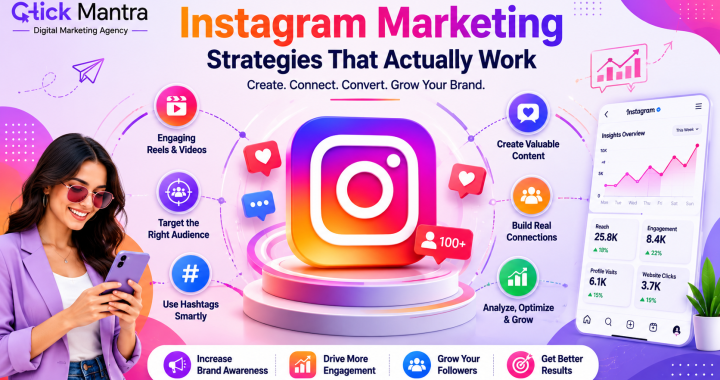
Instagram Marketing Strategies That Actually Work

Before creating an Instagram marketing strategy, it’s important to understand that Instagram is no longer just a photo-sharing platform. In 2026, it has evolved into one of the most powerful marketing channels for businesses, creators, and brands. With features like Reels, Stories, Broadcast Channels, Instagram Shopping, and AI-powered recommendations, businesses can reach highly targeted audiences, build brand awareness, and generate quality leads.

Instagram Marketing Strategies That Actually Work in 2026

Instagram remains one of the most effective social media platforms for businesses looking to grow their online presence. With over two billion active users worldwide, it offers incredible opportunities to connect with potential customers, increase brand awareness, generate leads, and boost sales.

However, simply posting attractive photos is no longer enough. Instagram’s algorithm has become smarter, favoring content that provides value, encourages engagement, and keeps users on the platform. Brands that understand how the algorithm works and create meaningful content are the ones that consistently achieve better results.

In this guide, we’ll explore proven Instagram marketing strategies that actually work in 2026 and help businesses grow organically while maximizing their return on investment.Continue reading