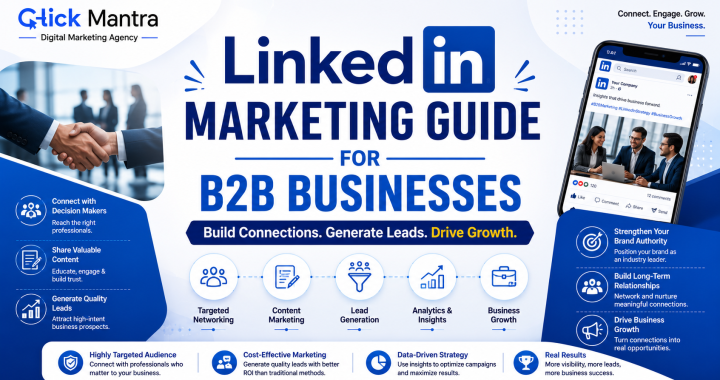
Before building a LinkedIn marketing strategy, it’s important to understand why LinkedIn stands out among social media platforms. Unlike entertainment-focused networks, LinkedIn is built for professionals and businesses. It is the leading platform for B2B networking, lead generation, recruitment, and thought leadership. In 2026, companies that use LinkedIn strategically can build authority, connect with decision-makers, and generate high-quality business opportunities.
LinkedIn Marketing Guide for B2B Businesses (2026)
LinkedIn has evolved into one of the most powerful marketing platforms for B2B (Business-to-Business) companies. With over one billion professionals using the platform, it provides businesses with direct access to decision-makers, business owners, executives, recruiters, and industry experts. Unlike other social media platforms that focus mainly on entertainment or personal interactions, LinkedIn is designed for professional networking and business growth.
Whether you’re a startup, digital marketing agency, SaaS company, IT firm, manufacturer, or consultant, LinkedIn can help you increase brand awareness, generate qualified leads, build trust, and establish your company as an industry leader.
This guide explains the most effective LinkedIn marketing strategies for B2B businesses in 2026, along with practical tips to maximize your return on investment.
Why LinkedIn Is Essential for B2B Marketing
B2B buying decisions usually involve research, comparison, and multiple stakeholders. LinkedIn supports this process by helping businesses connect with professionals who are actively looking for insights, partnerships, and solutions.
Key benefits of LinkedIn marketing include:
- Reach business decision-makers.
- Build industry authority.
- Generate high-quality B2B leads.
- Increase website traffic.
- Promote products and services.
- Recruit skilled professionals.
- Build long-term business relationships.
- Strengthen brand credibility.
For many industries, LinkedIn delivers some of the highest-quality leads among social media platforms.
Create a Professional Company Page
Your LinkedIn Company Page serves as your digital business profile.
A well-optimized page should include:
- Company logo
- Professional cover image
- Clear business description
- Website link
- Contact information
- Business location
- Industry category
- Company size
- Relevant keywords
A complete profile builds trust and improves visibility in LinkedIn search results.
Define Your Target Audience
Successful LinkedIn marketing begins with understanding your audience.
Consider:
- Industry
- Job titles
- Company size
- Business challenges
- Geographic location
- Decision-making roles
- Professional interests
Knowing who you want to reach helps you create more relevant content and advertising campaigns.
Publish Valuable Content Consistently
Content marketing is one of the strongest ways to grow on LinkedIn.
Share content that educates, informs, and solves business problems.
Examples include:
- Industry insights
- Case studies
- Success stories
- Market trends
- How-to guides
- Company updates
- Product launches
- Expert opinions
Avoid making every post promotional. Aim to provide value before asking for a sale.
Establish Thought Leadership
People prefer to work with businesses they trust.
Build authority by:
- Sharing expert advice.
- Publishing original research.
- Offering practical tips.
- Commenting on industry news.
- Writing LinkedIn Articles.
- Speaking about lessons learned.
Thought leadership helps position your company as a trusted resource.
Use Visual Content
Although LinkedIn is a professional platform, visual content often attracts more engagement than plain text.
Consider using:
- Infographics
- Carousel documents
- Short videos
- Product demos
- Event highlights
- Branded graphics
- Team photos
Professional visuals improve readability and encourage interaction.
Encourage Employee Advocacy
Employees can significantly extend your company’s reach.
Encourage team members to:
- Share company posts.
- Celebrate achievements.
- Participate in industry discussions.
- Publish professional insights.
- Represent your brand positively.
Employee advocacy often feels more authentic than corporate messaging alone.
Build Relationships Through Engagement
LinkedIn rewards meaningful interactions.
Spend time:
- Replying to comments.
- Answering messages.
- Congratulating connections.
- Joining relevant discussions.
- Participating in industry groups.
Networking is one of LinkedIn’s greatest strengths.
Optimize Your Posting Schedule
Consistency matters more than posting frequently.
A balanced schedule could include:
- 3–5 company posts each week
- Weekly thought leadership posts
- Monthly case studies
- Quarterly webinars or live sessions
Regular activity helps maintain visibility among your audience.
Leverage LinkedIn Groups
Groups allow you to connect with professionals who share common interests.
Participate by:
- Answering questions.
- Sharing expertise.
- Providing useful resources.
- Starting meaningful discussions.
Avoid excessive self-promotion, as it may reduce engagement.
Run LinkedIn Ads
LinkedIn Ads allow businesses to reach professionals based on highly specific criteria.
Target by:
- Job title
- Industry
- Company size
- Skills
- Seniority
- Education
- Geographic location
Popular campaign objectives include:
- Brand awareness
- Website visits
- Lead generation
- Event registrations
- Video views
- Recruitment
Although LinkedIn Ads can cost more than some other platforms, they often deliver high-quality B2B leads.
Use Lead Generation Forms
LinkedIn Lead Gen Forms simplify the process of collecting prospect information.
Benefits include:
- Higher conversion rates
- Pre-filled user information
- Better mobile experience
- Reduced friction
These forms are especially useful for webinar registrations, eBooks, consultations, and demo requests.
Showcase Customer Success Stories
Case studies and testimonials build credibility.
Highlight:
- Client challenges
- Solutions provided
- Measurable results
- Customer feedback
Real-world success stories help potential clients understand the value of your services.
Track Performance with Analytics
Measuring performance allows you to improve future campaigns.
Monitor metrics such as:
- Impressions
- Reach
- Engagement rate
- Follower growth
- Click-through rate (CTR)
- Website traffic
- Leads generated
- Conversion rate
Use these insights to refine your content strategy.
Common LinkedIn Marketing Mistakes
Avoid these common errors:
- Posting only promotional content.
- Ignoring comments.
- Incomplete company profiles.
- Inconsistent posting.
- Weak calls-to-action.
- Poor-quality visuals.
- Failing to analyze performance.
- Targeting audiences too broadly.
Avoiding these mistakes can improve both engagement and lead quality.
Best Practices for B2B Success
To maximize your LinkedIn results:
- Create people-first content.
- Share practical business advice.
- Build relationships before selling.
- Publish consistently.
- Invest in quality visuals.
- Encourage employee participation.
- Test different content formats.
- Optimize your profile regularly.
- Monitor analytics and adjust your strategy.
- Stay informed about LinkedIn feature updates.
These habits contribute to sustainable business growth.
Benefits of LinkedIn Marketing
A strong LinkedIn strategy can help your business:
- Generate qualified B2B leads.
- Increase brand visibility.
- Build professional credibility.
- Strengthen customer relationships.
- Attract talented employees.
- Drive targeted website traffic.
- Support long-term sales growth.
- Expand your professional network.
Because LinkedIn users are often in a business mindset, interactions on the platform can lead to valuable partnerships and opportunities.
Future Trends in LinkedIn Marketing
As LinkedIn continues to evolve, businesses should prepare for:
- Greater use of AI-powered content recommendations.
- Increased popularity of short-form video.
- More emphasis on authentic storytelling.
- Enhanced analytics and audience insights.
- Growth in live events and webinars.
- Stronger focus on community engagement.
Staying current with these trends can help businesses remain competitive.
Conclusion
LinkedIn has become an essential marketing platform for B2B businesses that want to generate leads, build authority, and develop long-term professional relationships. Unlike platforms focused primarily on entertainment, LinkedIn attracts users who are actively seeking knowledge, networking opportunities, and business solutions.
Success on LinkedIn comes from delivering value consistently. By optimizing your company page, publishing educational content, engaging with your audience, leveraging employee advocacy, and using LinkedIn Ads strategically, your business can strengthen its online presence and attract high-quality prospects.
Instead of treating LinkedIn as just another social network, use it as a platform for building trust, demonstrating expertise, and creating meaningful business connections. With patience and a well-planned strategy, LinkedIn can become one of the most valuable channels in your B2B marketing efforts.
Key Takeaways
- LinkedIn is one of the best platforms for B2B marketing.
- Optimize your Company Page with complete business information.
- Publish educational and industry-focused content regularly.
- Build thought leadership through expert insights.
- Encourage employee advocacy to increase reach.
- Use LinkedIn Ads for highly targeted lead generation.
- Track performance and optimize your strategy using analytics.
- Focus on relationship-building rather than direct selling.
Frequently Asked Questions (FAQs)
1. Why is LinkedIn important for B2B marketing?
LinkedIn connects businesses with professionals, executives, and decision-makers. It is an ideal platform for building credibility, generating qualified leads, and developing long-term business relationships.
2. How often should a business post on LinkedIn?
Posting 3–5 times per week is a good starting point for most businesses. Consistency and content quality are generally more important than posting frequency.
3. Are LinkedIn Ads worth the investment?
For many B2B companies, yes. Although LinkedIn Ads can have a higher cost per click than some other platforms, they often deliver highly targeted leads with strong business intent.
4. What type of content performs best on LinkedIn?
Educational posts, industry insights, case studies, success stories, expert opinions, infographics, short videos, and carousel documents typically perform well because they provide value to professional audiences.
5. How can small businesses succeed on LinkedIn?
Small businesses can succeed by maintaining a professional profile, sharing valuable content consistently, engaging with their audience, encouraging employees to participate, and building genuine relationships instead of focusing only on sales.
This article is optimized for SEO using keywords such as LinkedIn Marketing Guide, LinkedIn Marketing for B2B, B2B LinkedIn Strategy, LinkedIn Lead Generation, and LinkedIn Ads, while maintaining a natural, reader-friendly structure suitable for your Click Mantra website.