Here’s a complete, SEO-friendly blog article that you can publish on your website.
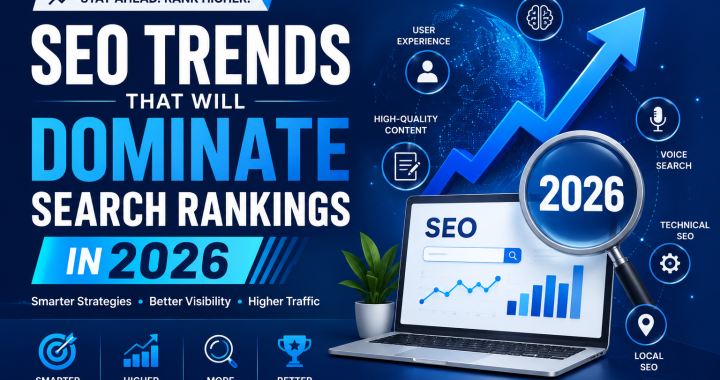
SEO Trends That Will Dominate Search Rankings in 2026
Search Engine Optimization (SEO) is evolving faster than ever before. As search engines become more intelligent and user expectations continue to grow, businesses must adapt their SEO strategies to remain visible online. In 2026, ranking on search engines is no longer just about using keywords or building backlinks. Google’s AI-powered algorithms, user experience signals, and content quality have become the key factors that determine search rankings.
Whether you’re a business owner, blogger, marketer, or SEO professional, understanding the latest SEO trends is essential for driving organic traffic and staying ahead of the competition.
In this guide, we’ll explore the top SEO trends expected to dominate search rankings in 2026 and how you can prepare your website for long-term success.
Why SEO Is More Important Than Ever in 2026
Millions of websites compete for visibility on search engines every day. Consumers rely on Google and other search engines to find products, services, answers, and local businesses. A strong SEO strategy helps your website appear in front of users at the exact moment they are searching for what you offer.
Benefits of modern SEO include:
- Increased organic traffic
- Higher search engine rankings
- Better user experience
- More qualified leads
- Higher conversion rates
- Improved brand credibility
- Long-term marketing ROI
- Reduced dependency on paid advertising
Top SEO Trends That Will Dominate Search Rankings in 2026
1. AI-Powered Search Is Changing SEO
Artificial Intelligence is transforming the way search engines understand content. Google’s AI systems analyze user intent instead of simply matching keywords.
This means websites should focus on:
- Solving user problems
- Answering questions clearly
- Creating comprehensive content
- Using natural language
- Building topical authority
Instead of writing for search engines, businesses should write for real people.
2. Search Intent Will Matter More Than Keywords
Keyword optimization is still important, but understanding search intent has become even more critical.
There are four primary types of search intent:
- Informational
- Navigational
- Commercial
- Transactional
Content should match the intent behind the user’s search. For example, someone searching “best SEO tools” expects comparisons, while someone searching “buy SEO software” is ready to make a purchase.
3. High-Quality, Helpful Content Wins
Search engines continue rewarding content that genuinely helps users.
Winning content should:
- Answer user questions completely
- Include real examples
- Be easy to read
- Stay updated regularly
- Offer unique insights
- Demonstrate expertise
Long-form, well-structured articles often perform better because they cover topics in depth.
4. Topical Authority Will Replace Single Keyword Ranking
Instead of creating one article for one keyword, websites should build clusters of related content.
For example, a digital marketing website can create content around:
- SEO basics
- Technical SEO
- Local SEO
- E-commerce SEO
- AI and SEO
- Link building
- SEO tools
- Keyword research
This demonstrates expertise and helps search engines understand your website’s authority on a subject.
5. User Experience (UX) Is a Ranking Factor
Search engines evaluate how users interact with your website.
Important UX factors include:
- Fast loading speed
- Mobile-friendly design
- Easy navigation
- Secure HTTPS connection
- Readable typography
- Minimal intrusive pop-ups
A positive user experience encourages visitors to stay longer and engage with your content.
6. Voice Search Optimization
Voice assistants continue to influence how people search online.
Voice searches tend to be:
- Longer
- Conversational
- Question-based
To optimize for voice search:
- Use natural language
- Include FAQ sections
- Answer questions directly
- Target long-tail keywords
7. Visual Search and Image SEO
Images are becoming increasingly searchable through AI-powered visual search tools.
Best practices include:
- High-quality images
- Descriptive file names
- Optimized alt text
- Compressed image sizes
- Relevant captions
Image optimization can drive additional organic traffic and improve accessibility.
8. Video Content Will Boost SEO
Video continues to dominate online engagement.
Embedding relevant videos can:
- Increase time on page
- Improve engagement
- Enhance user experience
- Support complex explanations
Creating short tutorials, demonstrations, and educational videos can complement your written content.
9. Local SEO Continues to Grow
For businesses serving specific geographic areas, local SEO remains essential.
Key local SEO strategies include:
- Optimizing your Google Business Profile
- Collecting customer reviews
- Using location-based keywords
- Creating local landing pages
- Maintaining consistent business information across directories
Strong local SEO helps businesses appear in map results and local search listings.
10. E-E-A-T Will Continue to Shape Rankings
Google values content that demonstrates:
- Experience
- Expertise
- Authoritativeness
- Trustworthiness
Ways to strengthen E-E-A-T include:
- Publishing expert-written content
- Citing reliable sources
- Keeping content accurate and updated
- Displaying author information
- Building a trustworthy brand reputation
11. Technical SEO Remains Essential
Even the best content can struggle to rank if technical SEO issues exist.
Focus on:
- XML sitemaps
- Robots.txt optimization
- Structured data (Schema)
- Canonical tags
- Crawlability
- Internal linking
- Broken link fixes
Regular technical audits help search engines crawl and index your website efficiently.
12. Mobile-First Optimization
Most users access websites through smartphones.
Your website should provide:
- Responsive design
- Fast loading
- Easy navigation
- Readable text
- Clickable buttons
- Optimized images
A seamless mobile experience improves both rankings and user satisfaction.
13. Featured Snippets and Zero-Click Searches
Many users receive answers directly on the search results page.
To increase your chances of appearing in featured snippets:
- Use question-based headings
- Provide concise answers
- Include numbered lists
- Add comparison tables where appropriate
- Organize content with clear headings
14. Structured Data and Schema Markup
Schema markup helps search engines understand your content better.
Common schema types include:
- FAQs
- Articles
- Products
- Reviews
- Events
- Local businesses
Proper implementation can improve search visibility and increase click-through rates.
15. AI-Assisted SEO Workflows
SEO professionals increasingly use AI to:
- Research keywords
- Analyze competitors
- Generate content ideas
- Optimize titles and meta descriptions
- Identify content gaps
- Monitor rankings
AI should enhance—not replace—human strategy, creativity, and editorial judgment.
Best Practices for SEO Success in 2026
Follow these proven strategies:
- Create content for people first.
- Focus on search intent rather than keyword density.
- Build topical authority with related content.
- Improve Core Web Vitals and page speed.
- Optimize for mobile devices.
- Use internal linking strategically.
- Refresh outdated content regularly.
- Earn high-quality backlinks naturally.
- Optimize images and videos.
- Monitor performance with analytics tools.
Common SEO Mistakes to Avoid
Avoid these practices that can hurt your rankings:
- Keyword stuffing
- Publishing thin or duplicate content
- Ignoring mobile optimization
- Slow-loading pages
- Buying low-quality backlinks
- Neglecting technical SEO
- Outdated information
- Poor website navigation
- Missing meta titles and descriptions
- Ignoring user intent
The Future of SEO Beyond 2026
SEO will continue to evolve alongside advances in artificial intelligence and user behavior. Future trends are likely to include:
- More conversational search
- Greater use of multimodal search (text, voice, and images)
- Improved AI-generated search experiences
- Enhanced personalization
- Better predictive search results
Businesses that prioritize user value, technical excellence, and trustworthy content will be best positioned for long-term success.
Conclusion
SEO in 2026 is about much more than keywords and backlinks. Search engines are becoming smarter, rewarding websites that deliver valuable, trustworthy, and user-focused content. Businesses must embrace AI-powered search, understand user intent, optimize for mobile and voice search, strengthen technical SEO, and build topical authority.
Rather than chasing algorithm updates, focus on creating exceptional experiences for your audience. By consistently publishing high-quality content, maintaining a technically sound website, and adapting to emerging trends, you can improve your search rankings, increase organic traffic, and build lasting online visibility.
SEO is an ongoing process, but those who invest in modern best practices today will be well-prepared for the search landscape of tomorrow.
Frequently Asked Questions (FAQs)
1. What is the biggest SEO trend in 2026?
AI-powered search and understanding user intent are among the most significant trends shaping search rankings in 2026.
2. Is keyword research still important?
Yes. Keyword research remains important, but it should be combined with search intent analysis and high-quality, comprehensive content.
3. How does AI affect SEO?
AI helps search engines better understand context, relevance, and user intent. It also assists marketers with keyword research, content optimization, and performance analysis.
4. Does website speed affect SEO?
Yes. Fast-loading websites improve user experience and can positively influence search rankings.
5. Why is E-E-A-T important?
E-E-A-T (Experience, Expertise, Authoritativeness, and Trustworthiness) helps search engines evaluate the credibility and quality of content, especially for topics that impact users’ decisions.
6. How often should I update my SEO content?
Review important pages every few months and update them whenever information changes, new trends emerge, or better optimization opportunities are identified.
7. Can small businesses compete in SEO?
Absolutely. By targeting niche keywords, focusing on local SEO, creating valuable content, and maintaining a technically optimized website, small businesses can compete effectively in search results.
If you’re publishing this on WordPress, consider adding:
- SEO Title: SEO Trends That Will Dominate Search Rankings in 2026 | Complete Guide
- Meta Description: Discover the top SEO trends for 2026, including AI-powered search, search intent, E-E-A-T, technical SEO, voice search, and practical tips to improve your rankings.
- Focus Keyword: SEO Trends 2026
- URL Slug:
seo-trends-2026