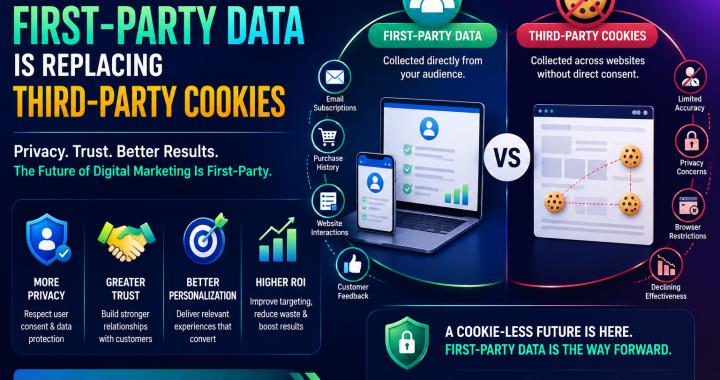
The digital marketing landscape is undergoing one of its biggest transformations in years. For a long time, marketers relied on third-party cookies to track users across websites, deliver personalized advertisements, and measure campaign performance. However, growing concerns about online privacy, stricter data protection regulations, and changes introduced by major web browsers have significantly reduced the role of third-party cookies.
As businesses adapt to this new reality, first-party data has become the foundation of modern digital marketing. Instead of depending on data collected by external sources, companies are now focusing on gathering information directly from their own customers. This approach not only improves data accuracy but also builds trust and supports long-term customer relationships.
In this article, we’ll explore why first-party data is replacing third-party cookies, the benefits for businesses, practical ways to collect first-party data, and strategies for using it effectively in 2026.
What Is First-Party Data?
First-party data is information that a business collects directly from its customers through its own digital channels. Since this data comes from people who have interacted with the brand, it is generally more reliable, relevant, and privacy-friendly.
Examples of first-party data include:
- Customer names and contact information
- Purchase history
- Website behavior
- Email subscriptions
- Customer feedback
- Product preferences
- Loyalty program activity
- Mobile app usage
- Customer support interactions
This data belongs to the business that collects it, giving marketers greater control over how it is stored and used.
What Are Third-Party Cookies?
Third-party cookies are tracking files created by domains other than the website a user is visiting. These cookies have traditionally been used by advertising networks to monitor user activity across multiple websites.
Businesses used third-party cookies to:
- Display personalized advertisements
- Track user browsing behavior
- Measure advertising campaigns
- Build audience profiles
- Retarget website visitors
Although effective, third-party cookies raised significant privacy concerns because users were often unaware of how much of their online activity was being tracked.
Why Third-Party Cookies Are Becoming Less Important
Several major changes have contributed to the decline of third-party cookies.
Growing Privacy Concerns
Consumers have become increasingly aware of how companies collect and use their personal information. Many users now expect greater transparency and control over their data.
Stronger Privacy Regulations
Governments around the world have introduced stricter privacy laws that require businesses to obtain user consent before collecting certain types of data.
These regulations encourage businesses to adopt more transparent and responsible data practices.
Browser Restrictions
Modern browsers have introduced features that limit or block third-party cookies to protect user privacy. As these restrictions expand, marketers can no longer rely on third-party tracking as they once did.
Consumer Trust
Customers are more likely to engage with businesses that clearly explain how their information is collected and used. Building trust has become an essential part of successful digital marketing.
Why First-Party Data Is Becoming the New Standard
First-party data offers several advantages over third-party cookies.
Higher Data Accuracy
Since information comes directly from customers, it is generally more accurate than data collected through external tracking systems.
Businesses gain deeper insights into customer preferences, purchasing behavior, and engagement patterns.
Better Personalization
First-party data enables businesses to create highly personalized experiences without relying on third-party tracking.
Examples include:
- Personalized email campaigns
- Product recommendations
- Customized website experiences
- Loyalty rewards
- Relevant promotional offers
Customers appreciate personalized experiences when they understand how their data is being used.
Greater Customer Trust
Transparency plays an important role in customer relationships.
Businesses that openly explain:
- Why data is collected
- How it is stored
- How it improves customer experiences
are more likely to earn long-term customer loyalty.
Better Marketing Performance
High-quality first-party data allows marketers to:
- Improve audience segmentation
- Increase campaign relevance
- Boost conversion rates
- Reduce wasted advertising spend
Better data leads to smarter marketing decisions.
Long-Term Sustainability
Unlike third-party cookies, first-party data is controlled by the business itself.
Companies that invest in collecting and managing first-party data today will be better prepared for future changes in digital marketing.
How Businesses Can Collect First-Party Data
There are many ethical ways to gather valuable customer information.
Popular methods include:
Website Registration
Encourage visitors to create accounts or register for exclusive content.
Email Newsletters
Offer valuable content in exchange for email subscriptions.
Examples include:
- Industry guides
- Checklists
- News updates
- Discount offers
- Webinars
Customer Surveys
Ask customers about:
- Preferences
- Satisfaction
- Product interests
- Future needs
Survey responses provide valuable insights while demonstrating that customer opinions matter.
Loyalty Programs
Reward customers for repeat purchases.
Loyalty programs help collect valuable behavioral data while increasing customer retention.
Purchase History
Every purchase provides useful information about:
- Customer interests
- Buying frequency
- Product preferences
- Seasonal trends
Businesses can use this data to recommend relevant products.
Website Analytics
Businesses can analyze:
- Most visited pages
- Time spent on site
- Popular products
- User journeys
- Conversion paths
These insights help optimize website performance and marketing strategies.
How First-Party Data Improves Digital Marketing
First-party data strengthens almost every marketing channel.
Email Marketing
Businesses can send personalized emails based on:
- Previous purchases
- Browsing history
- Customer interests
- Shopping behavior
Personalized emails often achieve higher open and conversion rates.
Content Marketing
Understanding customer interests allows businesses to create more relevant blog posts, videos, and educational resources.
This increases engagement and organic traffic.
SEO
Although first-party data does not directly influence search rankings, it provides valuable insights into:
- Popular search topics
- User behavior
- Content performance
- Conversion opportunities
These insights support stronger SEO strategies.
Paid Advertising
Businesses can use first-party audiences to improve advertising efficiency through customer list uploads, lookalike audiences, and remarketing options available on many advertising platforms.
Customer Experience
Using first-party data responsibly enables businesses to deliver smoother and more relevant experiences across websites, emails, apps, and customer support.
Best Practices for Managing First-Party Data
To maximize value:
- Be transparent about data collection.
- Obtain user consent where required.
- Protect customer information with strong security measures.
- Keep customer records updated.
- Segment audiences based on behavior and interests.
- Use automation to personalize communications.
- Regularly review your privacy policies.
Common Challenges
While first-party data offers many advantages, businesses should also prepare for challenges such as:
- Building customer trust
- Collecting sufficient data
- Maintaining data quality
- Managing privacy compliance
- Integrating data across multiple platforms
- Protecting sensitive customer information
Addressing these challenges requires ongoing investment in technology, processes, and transparency.
Future of First-Party Data
As privacy expectations continue to evolve, first-party data will become even more valuable.
Future trends may include:
- AI-powered personalization
- Predictive customer insights
- Privacy-first marketing strategies
- Stronger consent management tools
- Better customer data platforms (CDPs)
- Deeper integration between marketing channels
Businesses that prioritize ethical data collection and customer trust will be well-positioned for long-term success.
Conclusion
The decline of third-party cookies marks a significant shift in digital marketing. Instead of relying on external tracking methods, businesses are increasingly focusing on first-party data to understand their customers, personalize experiences, and improve marketing performance.
First-party data offers greater accuracy, stronger customer relationships, better privacy compliance, and more sustainable marketing strategies. While the transition requires new approaches to data collection and management, it also presents an opportunity to build lasting trust with customers.
Organizations that invest in transparent, privacy-focused data practices today will be better equipped to compete in the evolving digital landscape of 2026 and beyond.
Frequently Asked Questions (FAQs)
1. What is first-party data?
First-party data is information collected directly from customers through a company’s own website, app, email campaigns, purchases, surveys, or other direct interactions.
2. Why are third-party cookies being phased out?
Third-party cookies are becoming less common due to growing privacy concerns, stricter regulations, and browser changes designed to give users more control over their personal data.
3. How does first-party data improve marketing?
It enables more accurate audience segmentation, personalized customer experiences, stronger campaign performance, and improved customer trust.
4. Is first-party data more accurate than third-party data?
Yes. Since it comes directly from customer interactions with your business, it is generally more relevant, reliable, and up to date.
5. How can small businesses collect first-party data?
Small businesses can gather first-party data through website forms, email newsletters, customer surveys, purchase history, loyalty programs, and direct customer interactions.
6. Does first-party data help SEO?
While it doesn’t directly affect search rankings, it provides valuable insights into customer behavior and content preferences, helping businesses create more effective SEO strategies.
7. What is the future of first-party data?
As privacy-focused marketing becomes the norm, first-party data will play an even greater role in personalization, AI-driven marketing, customer analytics, and long-term business growth.
For maximum SEO performance, use these publishing details:
- SEO Title: Why First-Party Data Is Replacing Third-Party Cookies in 2026
- Meta Description: Learn why first-party data is becoming essential for digital marketing in 2026, replacing third-party cookies with privacy-focused, personalized strategies.
- Focus Keyword: First-Party Data
- URL Slug:
first-party-data-vs-third-party-cookies-2026