Here is a comprehensive SEO-friendly article you can use on your website.
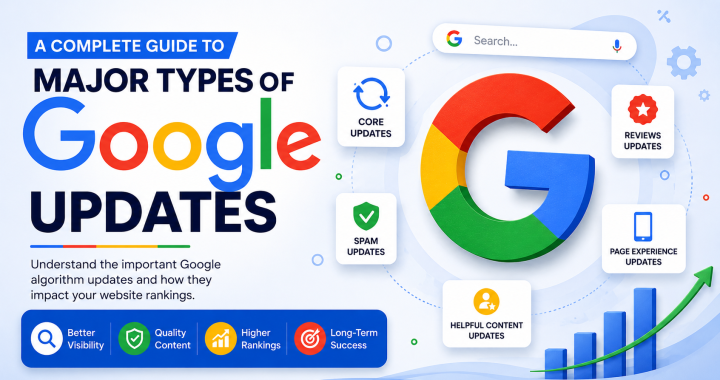
Major Types of Google Updates
Google regularly updates its search algorithm to improve the quality of search results and provide users with the most relevant information. These updates play a significant role in determining how websites rank on Google Search. While Google makes thousands of minor algorithm improvements every year, it also releases major updates that can significantly impact website traffic, visibility, and rankings.
For businesses, bloggers, and digital marketers, understanding the different types of Google updates is essential. Instead of trying to manipulate search rankings, website owners should focus on creating high-quality, user-friendly content that aligns with Google’s guidelines.
In this article, we’ll explore the major types of Google updates, how they work, and what you can do to keep your website performing well in search results.
What Are Google Updates?
Google updates are improvements made to Google’s search algorithm. These updates help Google better understand web content and provide users with the most useful, trustworthy, and relevant search results.
Some updates target spam websites, while others improve how Google evaluates content quality, page experience, or user intent. Since search behavior and technology are constantly evolving, Google continuously refines its algorithm to keep search results accurate and helpful.
Why Google Releases Algorithm Updates
Google’s primary goal is to improve the search experience for users. Algorithm updates help Google:
- Improve search result quality
- Remove spam and low-quality websites
- Reward original and helpful content
- Better understand user search intent
- Improve mobile search experience
- Promote secure and fast websites
- Reduce manipulative SEO practices
- Adapt to AI-powered search technologies
By updating its algorithm, Google ensures users receive the best possible answers to their search queries.
Major Types of Google Updates
Below are the most important Google algorithm updates every website owner should understand.
1. Core Updates
Core Updates are broad changes to Google’s overall ranking system. These updates don’t focus on a single issue or website type. Instead, they improve how Google evaluates content across the internet.
A Core Update can cause noticeable changes in search rankings because Google reassesses the quality and relevance of webpages.
Core Updates generally evaluate:
- Content quality
- Search intent
- Website authority
- User experience
- Expertise
- Trustworthiness
If your website is affected:
- Review your content carefully.
- Update outdated information.
- Improve article depth and originality.
- Remove thin or duplicate pages.
- Focus on providing genuine value to users.
Core Updates reward websites that consistently publish useful and reliable content.
2. Spam Updates
Spam Updates target websites that violate Google’s spam policies. These updates help remove low-quality or manipulative websites from search results.
Google’s spam detection systems are constantly improving, making it more difficult for spam websites to rank.
Common spam practices include:
- Keyword stuffing
- Hidden text
- Cloaking
- Link schemes
- Automatically generated pages
- Doorway pages
- Hacked content
How to stay safe
- Publish original content.
- Build backlinks naturally.
- Avoid black-hat SEO techniques.
- Follow Google’s Search Essentials.
- Focus on long-term SEO instead of shortcuts.
3. Helpful Content Updates
The Helpful Content Update rewards websites that create content primarily for people rather than search engines.
Google wants users to find articles that answer questions thoroughly, provide expert insights, and solve real problems.
Helpful content should:
- Answer user questions completely
- Demonstrate expertise
- Be original and informative
- Provide practical examples
- Avoid unnecessary keyword repetition
Avoid creating:
- Thin articles
- Clickbait content
- AI-generated spam
- Duplicate pages
- Content written only to rank
This update encourages websites to prioritize quality over quantity.
4. Reviews Updates
Google introduced Reviews Updates to improve the quality of product and service reviews.
Instead of rewarding generic reviews, Google prefers content that demonstrates real experience and provides useful information.
High-quality reviews include:
- Personal experience
- Original photos or videos
- Product comparisons
- Advantages and disadvantages
- Honest recommendations
- Detailed testing
If your website publishes review content, authenticity and transparency are essential.
5. Page Experience Updates
Google considers user experience an important ranking factor. The Page Experience Update evaluates how easy and enjoyable a website is to use.
Important page experience signals include:
- Fast loading speed
- Mobile responsiveness
- HTTPS security
- Stable page layout
- Easy navigation
- Minimal intrusive pop-ups
A website that offers a smooth browsing experience is more likely to perform well in search results.
6. Mobile-Friendly Updates
Most internet users browse websites on mobile devices. Google’s Mobile-Friendly Update ensures that websites are optimized for smartphones and tablets.
A mobile-friendly website should have:
- Responsive design
- Readable text
- Fast loading speed
- Easy navigation
- Clickable buttons
- Proper image optimization
Since Google uses mobile-first indexing, the mobile version of your website is the primary version used for ranking.
7. Link Spam Updates
Backlinks remain an important ranking factor, but Google discourages manipulative link-building tactics.
The Link Spam Update targets unnatural backlinks designed to manipulate rankings.
Examples include:
- Paid backlinks
- Private Blog Networks (PBNs)
- Link exchanges
- Automated link building
- Spam directory submissions
Best practices
- Earn backlinks through valuable content.
- Build relationships with reputable websites.
- Avoid buying or selling links.
- Focus on quality rather than quantity.
8. Local Search Updates
Google frequently improves local search results to help users find nearby businesses.
These updates affect searches such as:
- Restaurants near me
- Best dentist in my city
- Digital marketing agency near me
- Local repair services
To improve local rankings:
- Optimize your Google Business Profile.
- Keep business information accurate.
- Collect genuine customer reviews.
- Add local keywords naturally.
- Build local citations.
9. AI-Powered Search Updates
Google increasingly uses artificial intelligence to better understand search intent and content quality.
AI helps Google:
- Interpret natural language
- Understand context
- Detect helpful content
- Identify spam
- Improve search accuracy
As AI continues to evolve, creating clear, trustworthy, and user-focused content becomes even more important.
How Google Updates Affect SEO
Algorithm updates can lead to changes in:
- Keyword rankings
- Organic traffic
- Search visibility
- Click-through rates
- Indexed pages
- Featured snippets
- Local rankings
Not every update will affect every website, but staying informed helps you respond effectively.
Best Practices to Stay Safe from Future Google Updates
Following Google’s quality guidelines is the best long-term SEO strategy.
Focus on these practices:
- Publish original, helpful content.
- Update old articles regularly.
- Improve page speed.
- Make your website mobile-friendly.
- Use descriptive headings.
- Build natural backlinks.
- Improve internal linking.
- Optimize images.
- Ensure website security with HTTPS.
- Avoid manipulative SEO techniques.
Consistency is more effective than chasing every algorithm change.
Common SEO Mistakes That Trigger Ranking Drops
Avoid these common mistakes:
- Keyword stuffing
- Duplicate content
- Thin pages
- Slow website speed
- Poor mobile experience
- Broken links
- Buying backlinks
- Publishing outdated information
- Excessive advertisements
- Ignoring technical SEO issues
Correcting these issues can improve your website’s resilience during future updates.
Benefits of Understanding Google Updates
Keeping up with algorithm updates provides several advantages:
- Better search rankings
- Increased organic traffic
- Improved website authority
- Enhanced user experience
- Stronger brand credibility
- Higher conversion rates
- Better long-term SEO performance
- Reduced risk of penalties
By focusing on quality and user satisfaction, you build a website that can adapt to future changes.
Conclusion
Google algorithm updates are designed to make search results more useful, relevant, and trustworthy. While updates can sometimes lead to fluctuations in rankings, websites that prioritize high-quality content, excellent user experience, and ethical SEO practices are more likely to succeed over the long term.
Rather than chasing every algorithm change, focus on creating content that genuinely helps your audience. Invest in technical improvements, keep your information accurate, and continuously optimize your website. This people-first approach is the most reliable way to maintain strong search visibility, regardless of how Google’s algorithm evolves.
Frequently Asked Questions (FAQs)
1. What are Google algorithm updates?
Google algorithm updates are changes made to Google’s search ranking system to improve the quality and relevance of search results.
2. How many Google updates are released each year?
Google makes thousands of small improvements annually, along with several major updates such as Core Updates, Spam Updates, and Helpful Content Updates.
3. Which Google update has the biggest impact?
Core Updates usually have the largest impact because they broadly reassess how Google evaluates content quality across all websites.
4. How can I know if my website was affected?
Common signs include sudden drops or increases in rankings, changes in organic traffic, lower impressions, or fluctuations in keyword positions.
5. Can I recover after a Google update?
Yes. Improving content quality, fixing technical issues, enhancing user experience, and following Google’s best practices can help your website recover over time.
6. Does Google penalize AI-generated content?
Google does not penalize content simply because it is AI-generated. However, content that is low-quality, inaccurate, or created primarily to manipulate search rankings may perform poorly.
7. What is the best way to prepare for future Google updates?
The best strategy is to consistently publish helpful, original, and trustworthy content, maintain a fast and mobile-friendly website, follow ethical SEO practices, and regularly review your site’s performance.
If you’d like, I can also create a SEO-optimized version with H2/H3 headings, schema-friendly FAQs, meta title, meta description, and focus keywords for better ranking.